Tag Archives: Reactive Dogs

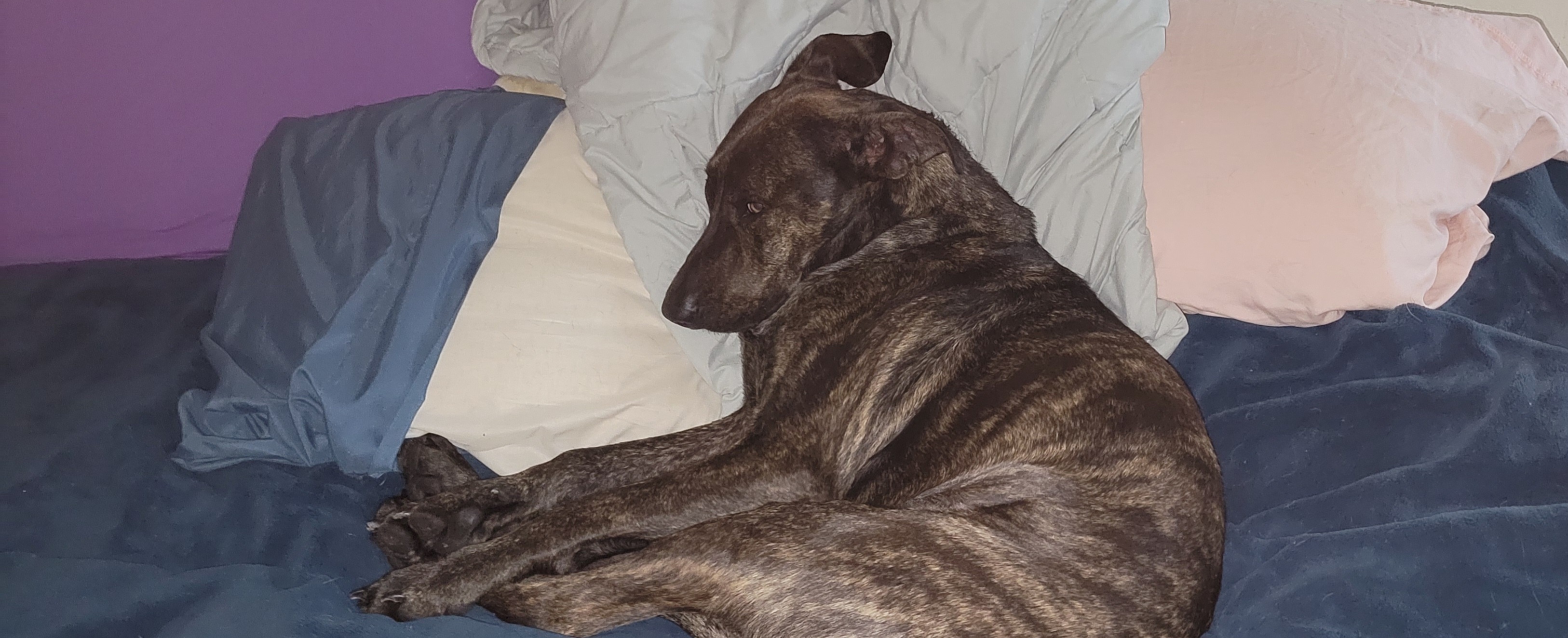
Padfoot Update: Calling the Shots

The single most important thing I did to manage Padfoot’s reactivity was eliminating triggers by timing neighborhood walks and finding places to walk where we could avoid people and dogs. Wesleyan Cemetery has been a godsend since it is close by and I can see anyone coming from hundreds of yards and change directions if I need to. Dog-friendly Arlington Cemetery is also great with wide roads and high visibility. If I didn’t have them, I’d look for an area zoned for light manufacturing, like the neighborhood around CARE’s Dane facility. It’s not scenic, but the roads are wide with little traffic and no foot traffic except us dog walkers. 

The theory is to use the low-trigger environment to work on our partnership so Padfoot is focused on me instead of taking his own initiative, then slowly introducing triggers. That works, to a point. It’s not in my personality to maintain heeling for a half-mile, and Padfoot rebels during longer training sessions. He’s a decent loose-leash walker and I want him to be free to smell things and enjoy himself. I suspect I am not as strict with him as most trainers would want me to be.

We are at the point where I can tell him to sit when I see him zeroing in on something, and he will switch his focus to me and actually sit (most of the time. This strategy works best if I have him sit beside a car so it blocks sight of the dog that has his attention). We are completing neighborhood walks with him only triggering once or twice, and rarely with people, as long as they are across the street.

Last week I introduced a new strategy. One of the easiest ways to train is to tell your dog to do something immediately before he’s going to do it anyway. (In addition to teaching them to correlate the behavior with the command, it kind of bamboozles your dog into thinking you are in charge.) I decided to use this strategy to remind him that I am leading and to keep his focus on me while we have a loose-leash walk.

To do this, I call shots all during our walks, even though he knows exactly where we are going: “left turn”, “right turn”, “cross” (for cross the street), “in” (for go inside), “about” (for turn around) and “walk on” (which I tell him when he stops because he’s focused on something and I am dragging him away before he goes off. Not strictly in the same category of the other commands, but hope springs eternal that he will eventually learn this one.) 

So far this is helping. Stay tuned. 

Padfoot: First Steps

Have you ever looked at those lists of dog breeds, the ones that tell you the which breeds have the most of certain characteristics? It you look at lists for “most intelligent,” “most loyal,” and “most willful/independent/stubborn” you’ll see the same breeds. And most of those breeds ended up in Padfoot’s DNA. 

Please note: anything I say about dogs and dog training is my opinion, based of thirty years with street urchins I have loved. I don’t claim to be a master dog trainer. Anyway, in my experience, the more intelligent a dog is, the less “do it because I say so” will work once they reach adolescence. And the smarter a dog is, the more they are likely to rebel at dominance oriented training and the more you need to build respect. 

Think about every movie you’ve ever seen where the well-meaning do-gooder attempts to help the kid living on the streets. The kid doesn’t trust anyone but himself, lacks discipline, and has little appreciation for structure. If you want to address reactivity, jumpiness, mouthiness and pretty much anything else, it’s essential to get them to accept your leadership. Getting there requires baby steps. 

Core to teaching your dog to control their impulses are Sit, Down, and Stay. Use plenty of praise and treats in a quiet setting with no distractions. (Padfoot picked up Sit in about 5 seconds. Down requires submission and was much harder for him. Stay was impossible. I would tell him to “Stay,” and he thought it meant “Dance.” I gave up and started over with “Freeze,” and that works for us.)

Once they have mastered these commands and understand that good things happen when they listen to you, start using them in your daily routine. Ask them to Sit at the door before you open it, or when friends approach (getting in front of their impulse so they don’t jump). Tell them to Stay while you set their dinner down several feet away, and pick the bowl up if they move before you release them (don’t make them wait too long. 10 seconds is enough to get the point across). 

The more they want what is on the other side (getting to go outside, getting to eat, etc.) the more motivated they will be to listen to you. And the more they listen to you, the more they will listen to you when they encounter distractions or triggers. Progress is only ever by degrees. It’s often one step forward and two back, so mark and celebrate all the tiny wins.

I know this sounds very remedial, and it is. It’s also the path of least resistance to building trust, and it’s so easy to forget basics when you are dealing with the chaos an undisciplined dog creates.

I mentioned my arsenal of aversives earlier, and they are another important tool. I’ll talk more about them next month.