All posts by carolannnewsome

C. A. Newsome writes mysteries with a dash of romance centered around the Mount Airy Dog Park in Cincinnati, Ohio.

Social Media for Authors: Your Platform, Pt 1

“What’s a platform?” I get asked this a lot. It’s a fancy name for the people interested in your work that you can sell directly to when you launch your book.  It’s also the stage you need to create BEFORE you release your book, if you want to sell books the day you launch. Everyone has some kind of platform, even if it consists of your mother and your best friend.

Nick Russell is the author of Gypsy Journal (an RV travel Newspaper) and two blogs. His thousands of readers provided a platform which sent his first book, Big Lake, to the New York Times Bestseller List.

Colleen Hoover is a gregarious social media addict who makes adventures out of her life’s foibles. She has the ability to make strangers feel like friends. Before she published her first book, she had a huge Facebook following. She also has sisters and other family who banged the drum for her to anyone who would sit still long enough to listen. Slammed made it to the NYT Bestseller List and was followed by two more titles that year.

A large initial surge of sales boosts your visibility and makes success stories like these possible. Of course, you have to have a dynamite book with a professional presentation in order for that initial surge to morph into word of mouth and lasting success.

Many folks think, “I’ll just post my book on Facebook and Tweet it, and people will buy bushels of them.” Ummm . . . it doesn’t quite work like that. That ship has sailed. Now Twitter is clogged with spam, and Facebook has changed their algorithms so that it’s harder and harder for people to see the posts they WANT to see, never mind yours.

Social media is a great tool, but when you begin to think about your platform, you need to start closer to home. Identify two groups of people: the “A” group is people around you who like you and will support you just because you’re you. Group “B” is your target audience, people who will love your book. Your first goal is to cultivate Group A in order to increase your reach to Group B.

Why? Because if you go around telling people to buy your book, you are likely to annoy them. If someone else says, “Hey, there’s this great book out, you need to read it,” they are grateful. Your best marketing is done by other people.

“How the heck am I supposed to get THAT to happen?”

I know many of you are already pulling your hair out, about how you hate marketing and are socially inhibited and . . . and . . . and.

I get it. You’re nerds, like I am. I was not gregarious in school, but I figured out this nifty thing. If you want to throw a party and get people to come, get them involved first. The person who has promised to bring the potato salad (or whatever) is going to show up, and chances are, they’ll bring a friend.

Take that thinking and apply it to your book. Instead of hiding in your closet with only the light from your laptop screen to guide you, involve other people. Let your friends and family know you’re writing a book. Consult them whenever possible. Use beta readers. Poll friends about cover designs. Allow them to share in the excitement of publishing.

A friend of mine is writing a book about a tattoo parlor. I suggested she consult with a local tattoo parlor and ask if she could pattern her fictional parlor after it, maybe even get permission to use their name. If she has a good experience with them, they are going to be bragging about being in a book. They will WANT to tell people.

Many people will volunteer to help you if you already have a connection with them. The key is, you have to be authentic about this. I didn’t ask people to shout out about “A Shot in the Bark.” They did it on their own and I’m convinced they’re responsible for the modest but respectable success my mysteries have achieved.

I’m presuming you are a nice person with a positive attitude, good manners and a good book. These are musts. If your book is not great and you go around alienating people, forget it. Being shy is not a deterrent. There are people who love to adopt shy people.

“But I write Sci-Fi. Who am I going to consult?”

Look, I can’t do everything for you, you’ve got to use your creativity to figure out ways to connect around your book. There is always something. A friend of mine writes Sci-Fi and he polled people to get weird names for the new races he was creating.

Not everyone will become your cheerleader, but some will. As a bonus, they will come up with things that never occurred to you. One of my betas thinks it would be fun if a friend of hers who is fundraising for an animal rescue did a murder mystery dinner based on my books. Even if it doesn’t work out, that’s more people talking about my books.

Get out of your hidey-hole and turn your book into a group project. You’ll be glad you did.

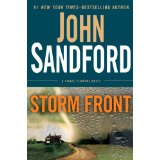
Storm Front: Not Your F-ing Flowers

stormfront cover

I’m having a hard time as a reader these days. Part of it has to do with becoming an author, giving me less time to read for pleasure and making me choosier as well as more critical of the books I read. Part of it has to do with reading the same series authors since the 90s.

For many of them, their story-lines have become preposterous, or they’ve gotten lazy and they’re phoning it in. I can tell because I still reread the stories that made me fall in love with them. James Patterson has become the McDonalds of popular fiction, farming out a dozen novels every year to a variety of short-order writers.

I was thrilled when the library phoned to say Storm Front was in. Thank God. John Sandford is still a reliable great read. I was in the middle of listening to Rough Country on audio, but happy to set it aside for the new installment in the Virgil (that F-ing) Flowers series.

I usually avoid reading the inside flap on authors I like because I want to be surprised every step of the way. This time I was riding in the car with a friend when I picked it up, so I took a peek. Turns out, Virgil is in pursuit of an artifact with calamitous religious implications smuggled out of Israel. A DaVinci Code knockoff? Not your typical Flowers fare, but what the hey, it’s John Sandford.

So I cracked the spine and turned the pages and found: “I wrote this novel with help from my partner, Michele Cook . . .” and she’s a journalist and screenwriter who never wrote a novel before.

Uh-oh.

I tried, I really did. I made it to page 60, but then I had to stop. It’s not a bad book, exactly. The writing is competent. If this were a college student, I’d give it an A. Not because I wanted to, because they did what they were supposed to. But it lacks the heart that makes a great book live.

I’m sure many people will be perfectly happy with the book. It’s just that it’s not John Sandford, whose ball-scratching masculinity sweats from the pores of every word. Sandford put the “F-ing” in Flowers. This Virgil is a paper doll in comparison.

I’m sure the rest of the book is competent as well. It’s just that I feel like someone gave me tickets to see Elvis and I got Taylor Hicks in a white jumpsuit instead.

Perhaps it’s not fair of me to judge a book I won’t finish, but my time is valuable and so is yours. If you aren’t picky, and you aren’t a rabid Sandford fan, you will probably enjoy this book. But I don’t think Sandford did Cook any favors by putting his name on the cover and setting expectations so high.

You’ve been warned.

Pulling for Gravity

Angie bought the large popcorn. I don’t know why, she only ate a few handfuls. I plowed through most of the rest of it during the movie and gained a pound and a half. Gravity is made for nervous munching.

I was exhausted when the it was over. This is no feel good movie full of cinematic manipulations that leave you exhilarated. Instead, I felt like I had struggled each graceless, torturous minute along with Sandra Bullock. At the end, all I wanted to do was sleep for a week. Which is why I’m writing this morning instead of last night.

Gravity is a what-if based on little things that become astronomical in space. There is no war. Only a botched disposal of a satellite that ends in a chain reaction that sends shrapnel blowing by the Hubble telescope at 20,000 miles per hour. There is no enemy except the environment and one’s own fears.

I lived and died by inches while watching Bullock, a scientist barely-competent in space, cope with the worst scenario possible: what do you do if your spaceship is destroyed and you’re running low on oxygen? As Bullock faces her own imminent death and struggles with each tiny mishap, she also struggles with her own will to live. As spectators we are confronted with larger questions about life.

Tragedies destroy. They also build, through gritty persistence of the human spirit.

Sandra Bullock give the performance of her life in Gavity, far outstripping her Oscar winning turn in The Blind Side. Geroge Clooney is her superb counterpoint. Both of them are sure for Oscar nods, and I find it hard to believe that they won’t win. Despite the exotic background, it is acting that carries Gravity.

Production values are excellent and the special effects seamless and believable. The photography is stunning. Their excellence is that of a good servant, working efficiently and silently so as not to distract from the story.

Go see Gravity. And be sure to take lots of popcorn. You’re going to need it.

Grade: A+

The 3 Faces of Creativity: Are You a Dilettante, Artist or Craftsman?

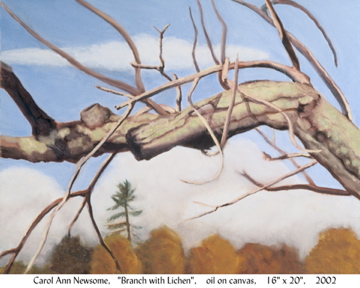
BranchwithLichen

Have you ever defended your lack of sales by saying, “I’m an Artist“? You may be right.

Yesterday morning, a deluge trapped me in the picnic shelter at the dog park with one of the other hard-core regulars. In talking about the house he was looking for, “Dave” said his fiance “Sue” had lusted after an inner-city building with one floor converted into a gallery.

I didn’t know Sue was an artist. Dave explained that she had always been too critical of her work and wound up giving it away, trashing it or painting over it. Then she went to NYC a few years ago and was disgusted with the art in the Museums. “She said, ‘my stuff was way better than this,’ and she was right.”

I began reflecting on my own creative journey with various mediums, and how attitude affects our chances for real world success. I decided there were three types of creative people. Dilettantes, Artists, and Craftsmen (or Crafts-women, or Crafts-people, or just plain Crafters).

THE DILETTANTE
I like to sing. I used to hold concerts in my car during long solo drives. On two memorable occasions, I sang back-up with friends. I used to indulge in fantasies about being onstage, singing in front of thousands of screaming fans. In my head, I auditioned for Simon Cowell and blew him away (yeah, right). Today I make up funny songs to sing to my dogs. They have multiple verses and everything. I imagine it would be fun to make a record of doggie songs one day. Meanwhile, I only sing them for my four-footers.

Notice how I’ve never had lessons, never submitted my singing to scrutiny, never worked at it, and my main value in singing is fun. I don’t do it on a regular basis. I’m easily distracted from it and have no true commitment to it. I fantasize that I’m fabulous without doing anything to get that way.

When it comes to singing, I’m a dilettante. And that’s okay as long as you know that’s what you are. The problem comes in when someone deludes themselves into thinking they will actually accomplish something of value someday. It has nothing to do with talent, of which the dilettante may have much or little.

The dilettante may actually be talented in so many things that they can’t make up their mind what they want to do. They may be serial monogamists, taking on one passion after another and dropping them when it gets tough or boring, or they may be polygamists, doing so many things at once that they never get beyond amateur status with any of it.

Being a Dilettante has everything to do with attitude, which with the Dilettante is an unwillingness to commit to one thing; to work at their medium, evaluate it with a critical eye and stick with it despite obstacles.
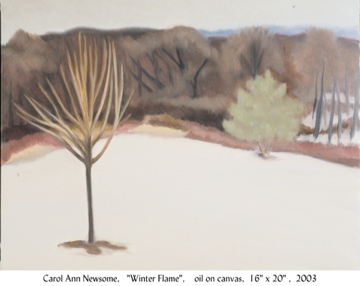
WinterFlame

THE ARTIST
I’ve been an artist all my life. I knew I was going to be a painter when I was in grade school. I totally identified with being a painter. I sold my first painting at the age of fifteen and had my first art show when I was nineteen. I went to college to study art. While I was in grad school, I told one of the other TA’s, “If I only had enough money to either eat or buy art supplies, I would by the supplies because someone will always feed me, but they won’t necessarily buy me bronze.” (I was casting statuettes at the time). I was in the studio every day and wrapped my entire life around art.

The Artist has a voice that must express itself. Sometimes it feels like channeling, with unexpected results. Always, the work justifies itself and must manifest as it must be, according to the inner urging of the artist. They rail against limitations imposed on their creativity by outside sources, such as size requirements for submission to shows, or the necessity to work according to someone else’s deadline.

The Artist is usually compelled to share their work somewhere, somehow, and is willing to accept criticism. Despite the validity of the criticism, their inner voice is their god, and their work is more precious than life.

Nothing pissed me off more than someone else picking up a paintbrush and doing something to one of my pieces. I take that back. there is one thing. While I may occasionally destroy something as not good enough, you’d better not. It’s the one way guaranteed to end our relationship. Just ask my ex-husband.

The Artist constantly strives to transcend their limitations and conversely, may stop producing in a popular body of work because they “have nothing more to say” about that particular subject. The object serves as a vehicle for a higher purpose. They often define themselves as a “process person.” They literally get high off their work and if they go too long without being creative, they become depressed.

The Artist desires recognition and often deserves it, but usually rebels against the necessity of marketing and of compromising their work to suit the market place. They find it impossible to put a price tag on it. Artists are often offended that someone would buy a painting to have “something pretty that matches the sofa.” Discussing your decorating scheme with an Artist is likely to result in fisticuffs.

THE CRAFTSMAN
A Craftsman loves what they do, but they are able to balance their work with external realities and the market place. The things they create have a purpose, whether is it to hold their coffee, look pretty on someone’s neck or entertain. Their mantra is “form follows function” and they use external limitations, such as the size of a room or its color scheme (or genre norms such as page length and themes) as springboards for their creativity. Their pleasure comes from creating a fine thing that goes out into the world and serves its purpose.

While an Artist serves their work, the Craftsman’s work serves him/her. They understand that people only buy what they want, and if you want to sell to them, you need to provide what they’re willing to buy. They expect to profit from their work and budget their investment into each project accordingly. They know when their work is “good enough” and are willing to let it go out into the world without being absolutely perfect.

They have a professional attitude about selling the output of their creative impulses and dealing with the marketplace does not make them feel dirty. They understand the concept of branding and providing a consistent product. Business people find them easy to deal with and will choose to partner with them over more talented individuals for that reason.

Craftsmen also have the healthiest response to criticism. Their assessment of their abilities is realistic and they do not identify with their work the way the Artist does. Like anyone else, they may get nervous when they put their creative efforts out before the public, but it’s not their guts hanging on display.

Most of the successful artists in the high art world have at least some Craftsman in them. It’s a dirty little secret, but the people who sell art rarely have the patience to deal with a total Artist, such as DeKooning or Van Gogh (or more recently, Basquiat). It’s their gallery and they like being the temperamental ones. The danger with the Craftsman type is that of capitalizing on one’s popularity to the point of turning out cookie-cutter creations to satisfy the market.

When it comes to my writing, I’m a craftsman. I enjoy it, but I don’t feel driven by it they way I have been driven by painting. It’s a job to me. The very best of jobs, but still a job.

Each of these types has their place and their value. The Dilettante is playful and willing to try new things. They learn from each of their creative flirtations and may be able to apply what they learn when they settle on a direction, giving them a very rich perspective. The Artist is passionately committed and unwilling to settle for mediocrity. The Craftsman is a realist and is able to manage their creative life so it supports him/her, rather than the other way around.

These three aspects of creativity function best when they are combined in one person. If you’re feeling a bit lopsided, try on a different style for a while.
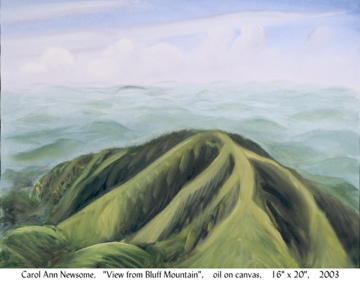
BluffMountain

Apple-Oatmeal Pancakes

It’s Sunday Morning, so I thought it would be a good time to have my Apple-Oatmeal Pancakes. They’re Aztec Diet friendly and easy peasy to make. They’re moist and sweet, so they don’t need butter or syrup. If you want to reduce the fat, reduce the batter to one egg or use egg-whites instead.

Heat your frying pan or griddle medium (these are tender, so you don’t want it as hot as for regular pancakes)

Dump the following in a blender:

    2 eggs
    1 apple, in chunks (minus the core)
    1/2 Cup almond milk
    1 Cup rolled or quick oats
    1 TBSP baking powder (non-aluminum, preferably)
    1 pinch salt

Blend until more-or-less smooth

lightly oil your griddle (coconut oil preferred)

Pour dollar-sized pancakes (these do not flip well if they are made as full sized pancakes)

Turn when bubbles break and set in the top.

Makes a feast for one or modest portions for two.

Options:
Add cinnamon to taste
Add in a handful of walnuts and pulse once the batter is ready.
Substitute 1/4 cup plain yogurt and 1/4 cup water for the almond milk, or use regular milk
Add 2 TBSP cocoa and honey to taste for chocolate pancakes.

Enjoy!!!!!

How to Be a Better Beta Reader

Beta-2A

“Tell me, honestly, do these pants make me look fat?”

How many times have you wanted to answer that question with a resounding “YES! THEY HAVE ‘HINDENBURG’ WRITTEN ACROSS THE ASS! IN NEON!”

We don’t ever say it. Not if we want to keep our friends and loved ones. Our jobs. Peace with the neighbors. Tell the truth and you will be shunned. The closest we can come is a very tactful, “That’s not your best look. I like (fill in the blank) on you so much better.”

But that’s exactly what I want, need, prize in a beta reader.

What exactly is a beta reader you ask? Only the most important support person in that village it takes to get an indie book published. Indie authors cultivate a group of beta readers. These are the first people who see a manuscript, often at a point in development where it is nearly finished but not totally polished. They serve as a consumer focus group to give feedback about a book before it is published.

This is critically important to indie writer/publishers. Traditional publishing houses suffer from a huge deficit. They have a long food chain to support and they have to nurture projects that they know will sell. This results in slick, cookie-cutter books by big name authors that often play to the lowest common denominator, at the direction of their editors.

An indie author/publisher has a food chain of 1. He/she may farm out aspects of the publishing process, or an indie author may do it all themselves, editing, proof-reading, cover design and formatting. There is one thing an indie author cannot do. An indie author cannot experience their book the way a reader will.

One nifty thing about being an indie author is being able to take risks. Be different. Pursue a niche category. I don’t have to convince an editor that my book will sell. I only have to please myself and my readers. I value the beta readers who give me feedback on my books because they help me do a better job of serving my audience.

It’s hard to find good beta readers. Why? Social conditioning. The fear of hurting someone’s feelings, of offending, of damaging a relationship. So often a newbie beta reader will respond with some typo corrections and a vague “I liked it, it was good.”

Beta-1

While we really, really want you to love it, that response is always vaguely unsatisfying. I know I’m not perfect. I want to be better. In order to be better I need your raw, unfiltered, unvarnished response (okay, you can use a little tact and I won’t mind). I’ll pull on my big girl panties when I review your feedback and take care of my own ego.

My favorite beta reader once decided I was using a certain word too many times. She began numbering the instances in red pen, with the numbers getting larger with each instance. She added exclamation marks, first one, then two, then three. She circled and underlined. It let me know how annoying it was. I cut most of them out and we are still valued friends.

My usual method of working with a local beta reader is to supply them with a paper copy of the manuscript. If they don’t have a red pen, I will supply one. My fondest wish is that the reader use the red pen to scribble commentary as they go along.

I supply computer files for remote readers. In the best of all instances, they have full Word functionality on their device so they can add comments as they go along and return it to me with the comments included. Otherwise, they just take notes and send those back.

Go ahead, scrawl “BORING” right across that four page info dump. Lose track of who’s talking in a conversation? Let me know. Like something? You can put little hearts on it, I won’t mind. Did I put the bullet in his left arm in chapter 3 and bandage the bullet hole on the right arm in chapter 4? Point that out. If I say Lia rode west, into the sunrise, for heaven’s sake, correct me!

Beta-2B

Does it drag? I really, really want to know that. If it drags for you, it’ll drag for other people, too, and they won’t bother to finish the book.

I know it’s hard. It’s like telling someone their fly is down. If your fly was down, and you were about to enter a room full of people, wouldn’t you want to know?

Some Hints:

1. Be a good match. Only beta books in genres and styles you like. I stopped using one beta reader because she kept pointing me at John Grisham, her favorite writer. I am very lukewarm about John Grisham and I absolutely don’t want to be him!

2. Be yourself. Don’t try to give me the “correct” response. Give me yours. I want to now what did and didn’t work for you.

3. Read for pleasure. Make comments when you notice something, but don’t feel like you have to comment on everything.

4. Don’t rewrite my book for me. That’s my job. Stick with feedback. “Too gory” “more mushy stuff,” (or “too mushy” “more gore”).

5. We want you to be totally immersed in the world we’ve created. If anything catches your attention and jars you out of that world, point it out. It could be an obvious error, weird word usage, an overwrought metaphor or something else.

6. Don’t assume I meant to do something. When I first wrote Drool Baby, I wasn’t sure if I was going to stick with the mystery format or go for a thriller format that revealed the killer early in the book. After I decided to stick with the mystery format, I failed to erase all instances of my murderers name. None of my betas mentioned it. It was published with the killer revealed a good sixty pages before the final confrontation. (It was corrected soon after, thankfully)

7. If you happen to catch a typo, sure, go ahead and mark it, but don’t search for them. I’d rather you were in the flow of the book instead. I’ve got someone else who proofreads. It’s a different mindset.

8. I may agree with you or I may not. Your opinion still provides valuable information to me.

Authors – Do you have any tips/hints for beta readers you’d like to add?

Mud in Your Eye

Mud is the one movie I wanted to see this spring, and of course I missed it. Which is why this review is several months too late.

Fourteen year-old Ellis is a romantic in a hard-scrabble life that offers him none. He lives on a houseboat on a river in Arkansas, his family supported by the the fish his father catches, that he and Ellis sell in town. When we meet Ellis, the impending breakup of his parent’s marriage threatens his way of life.

Ellis is not concerned. While pursuing his first kiss, Ellis and his friend, Neckbone, stumble across a fugitive (Mud) who needs their help. Like Pip in Great Expectations, Ellis obliges. With the reluctant assistance of Neckbone, he staves off disillusionment by devoting himself to Mud’s reunion with the love of his life.

Director Jeff Nichols is understated and matter-of-fact in the way he portrays a small town that prosperity has passed by. He neither ennobles nor dramatizes the lower-class denizens, humanizing them as people pursuing life the best they can and allowing the story to shine through. He errs in creating a tone that is suitable for a Disney adventure, presumably to assure a family friendly offering. Mud is an engaging film. With a little more grit, it would be compelling.

Tye Sheridan as Ellis is a heart-felt knight errant and Jacob Lofland is utterly convincing as Ellis’s loyal and pragmatic follower, Neckbone. I would not be surprised to see both Lofland and Ray McKinnon (as Ellis’s Father) receive Oscar nods for supporting actor.

Sam Shepard is a bit too affable for a man who has never spoken to his neighbors. This I lay on Nichol’s direction. Shepard has been brilliant in the past as tough, lonely men. He could have easily shined here. As it is, we are more afraid of Ellis’s taciturn dad than we are of the hermit marine sniper or the fugitive.

Matthew McConaughey is competent playing himself. The rough, uneducated, river rat poetry of Mud’s dialogue is lost in McConaughey’s slick elocution. We would better understand Juniper’s dilemma if we could see Mud as he was surely intended: a simple man who thinks no more than three days ahead, and whose whole life’s ambition is to serve his love for Juniper. (I would have picked Christian Bale for this role)

Reece Witherspoon’s is spot-on as the beguiling and troubled Juniper, for whom Mud’s love is not quite enough enough even while she refuses to let it go. Her small part carries the heavy weight of convincing us that a man would ruin his life over her. Without this conviction, Mud’s dedication would be merely pathetic.

Ellis is navigating troubled waters in this coming of age story, in which no adult has a happy relationship. The real question is, who is going to grow up?

I give it a nice, solid “B”

Name This Bird!

Heron4

Life is quiet at my stepmother’s home Glen Ellyn, IL, where the default on cable is the Hallmark channel, and the browser goes into hysterics if I even think about Facebook. My main occupation during my recent visit was stalking the very shy blue heron that has lived in the park behind the house for, well, I don’t know, but it’s been a very long time. My dad and his wife watched it for years before Dad died. I painted a not particularly good picture of it ten years ago, from a fuzzy photo I took with my first digital camera.

Heron2

This trip I was determined to get a decent photo of him. I especially wanted a shot of him flying, which meant creeping up, getting the camera ready, then taking that one step further to make him bolt. I still don’t have the timing right to catch that moment when he first spreads his wings, but the results weren’t bad.

Heron3

It occurred to me while I was pursuing him that he has been like a member of the family for a very long time and no one has given him the dignity of a name.

Heron1

I need help, People. I’m at a loss. What would you name this bird?

The Starving Artist Cookbook – Get it While it’s Free!

Click Image to see on Amazon

On August 22, Self-Publishing Guru Joe Konrath reported that he got drunk and wrote, edited, formatted, designed a cover for and published a short on Amazon in an hour. On four different occasions. He found this exercise tremendously freeing and challenged his readers to try it, giving them 8 hours to accomplish what he did in one.

On August 26, he promised to feature anyone who met the challenge in his August 30 blog: 8 Hour Contest Winners. He gave us until August 29th to complete this and send him the info (click the link to see the books, many of them are free tonight and tomorrow).

I’m not a huge Konrath fan, but I was outside of Chicago at the time visiting my stepmother. Her only computer is an ancient Dell that can surf for exactly five minutes before the browser locks up. There’s only so much I can do on my Kindle Fire. Like watch my on-line writing group buds whooping it up over the silly books they were writing under groaner pen-names. The more fun they were having, the more I felt like I was missing out.

Then I remembered. Back before Lia Anderson was a gleam in my eye, I was researching publishing options. Not because I thought I had a novel in me. Because I wanted to write a cookbook. I abandoned this project for two reasons: 1. I upgraded my word processing app and it ate my MS and 2. I thought eating right was going to cure my TBI (fool, I) and when I realized I didn’t have all the food answers, I dropped the project until such time that I did.

I never did find my answers, but I realized I had a lot of recipes I’d collected along the way. I got back into Cincinnati at 11 p.m. on August 27. Twelve hours later I sat down at my computer (lovely, lovely Mac! How I missed you!) and tossed together The Starving Artist Cookbook, skimming just under Konrath’s 8 hour deadline.

It’s not perfect. I didn’t get to include everything I wanted. The cover is, admittedly, ‘Meh.’ I didn’t have time to create a table of contents. But it’s out there. And tonight and tomorrow, it’s FREE! After that it’s $.99.

I will be adding to this book (and raising the price to a lofty $2.99) sometime this fall. Then I will contact the ‘Zon and tell them I have improved my book, and would they please let all the nice people who already bought it, download the improved version.

It’s written from Lia’s perspective, since she and I share the same quirky attitude about food. It has a large section featuring vegan smoothies, including Lia’s famous ‘pond scum’ smoothies. There’s info about making yogurt (which you can do with almond milk, if you like) and cultured veggies (yum!) and many raw food recipes. There are only a few recipes with include fish and chicken, and none with red meat. It includes several chocolate recipes, including raw fudge and my own crazy cake. One of the first things I’m going to add when I update the book will be Jim McDonald’s crazy cake recipe (which gets a mention in soon-to-be-released Maximum Security).

So, get your copy of The Starving Artist Cookbook now, while it’s free. I guarantee you’ll find at least one keeper recipe in it. And if you don’t, I’ll give you back every penny you didn’t spend on it.

Blue Jasmine: Blanche Dubois Lives!

As my stepmother and I were waiting for the matinee crowd to disperse, the nice woman sitting on the other side of her asked me how I liked the movie.

I said,”I don’t think wives in the Hamptons deserve that much of our attention.”

She said, “It’s supposed to be funny.”

OH. I guess I’d forgotten that this is a Woody Allen film. I’ve made a point not to watch Woody Allen films since he made that one, the title of which I forget, about his relationship with Mia Farrow’s seventeen year-old adopted daughter.

Not because I’m a moralist. Because I refuse to justify the narcissism of many New Yorkers, that those of us who are not privileged to live in the Big Apple are endlessly fascinated by the neuroses of those who do.

That said, Blue Jasmine is a compelling character study of a woman who has held her blue chip life together with daily doses of denial and a husband who feeds her narcissism. Cate Blanchett (whom I love) gives possibly the best performance of her career. This film is worth seeing simply to watch her fall apart in a genteel version of The Bad Lieutenant (The Harvy Keitel version, not the Nicholas Cage remake).

Jasmine’s (nee Jeanette) fall from grace is occasioned by the arrest of her husband for financial crimes which bilked investors out of millions. We see her as she arrives in San Francisco with her Louis Vitton luggage to live with her grocery cashier sister,Ginger, in a situation borrowed heavily from Tenneessee Williams’ A Streetcar Named Desire.

Correspondences to the classic play include Ginger’s Stanley Kowaski type boyfriend, Chili, Jasmine’s dependence on alcohol and Xanax to get her through the day, and even a mild sexual assault (though not perpetrated by Stanley).

Jasmine’s attempts to reinvent herself are interspersed with glimpses of her former life with Hal (played by Alec Baldwin, in the smug operator persona he has perfected over the course of his career).

Perhaps the film is an attempt to give those of us whose lives were affected by financial hocus pocus such as that perpetrated by Hal, an opportunity to feel superior to the 1%.

But funny? Since when is Blanche Dubois funny?