All posts by carolannnewsome

C. A. Newsome writes mysteries with a dash of romance centered around the Mount Airy Dog Park in Cincinnati, Ohio.

Winter Song – A Dog Owner’s Lament

It is so Cold today
The wind is Bold today
And I am Sold today
On staying in my bed.

Oh, No, the puppies said
No matter what your dread
We’ll dance upon your head
Until you see our way.

And so we’ll bark and bark
Eventually you’ll hark
You’ll take us to the park
So we can run and play.

(Sung to the tune of Tra-La-La Boom-de-ay)

How Thick Is Your Skin?

Yesterday, I was watching a video by Jack Canfield, and he said Chicken Soup for the Soul was turned down 144 times before it was published. I thought, “Wow, he must have really thick skin!”

We all get dissed. Our family and dearest friends don’t read our books. Maybe they think it’s silly we write them, or that we’ll never make any money doing it. I hear this over and over again in my writer’s group. Those of us who self-publish still get treated like our money and sales don’t mean anything by authors who publish by ‘legitimate’ means. My mother STILL wants me to look for a ‘real’ publisher. I keep running the numbers for her and she says, “Oh.” Until next time, anyway.

And you thought it was only your family, your friends and your colleagues who were unsupportive?

The one thing that derails success for creative folks more than any other is a thin skin. Every big project I’ve ever done has had naysayers, no matter how great the idea was, or how well it worked out, and it was vital to be able to keep my focus and look for people who did support me.

I wrote my first book as a lark and did not tell anyone about it until the first draft was done. I didn’t have to listen to any critics, and I think a lot of writers operate like that. There’s only one problem with this strategy. It’s essential to gather partners to your success before you’re ready to publish, and it takes time to do that. Thus exposing you to criticism during those crucial early days of developing your dream.

Forty years of creative work have taught me a few things:

  1. Criticism is more about the critic than the thing being criticized. They don’t believe they could pull it off, so therefore, you can’t either.
  2. People who diss you today will forget all about it when you turn out something great.
  3. You have to be 100% behind your project first. Are you willing to invest your time, your money and whatever it takes to make it happen?
  4. People like to be part of the crowd. Get your most likely supporters behind you, then go after the tough sells. List the people they know who are behind your project, and they’re more likely to jump on board.
  5. If they thought it was a great idea, they’d be doing it. If your idea is truly original, NOBODY is going to think it’s brilliant, at least at first. You’re going to have to sell the idea, over and over.
  6. If the criticism is specific, consider it. If it’s valid, use it to improve your project and thank them for pointing it out. Because your detractors will be your best source of information about improving your project. And it will piss them off.

Grab some Kevlar, pour another cup of coffee and keep on keeping on. If nobody gets what you’re doing, you may be onto something wonderful.

Book Sample: “Maximum Security”

My Girl, Max
My Girl, Max

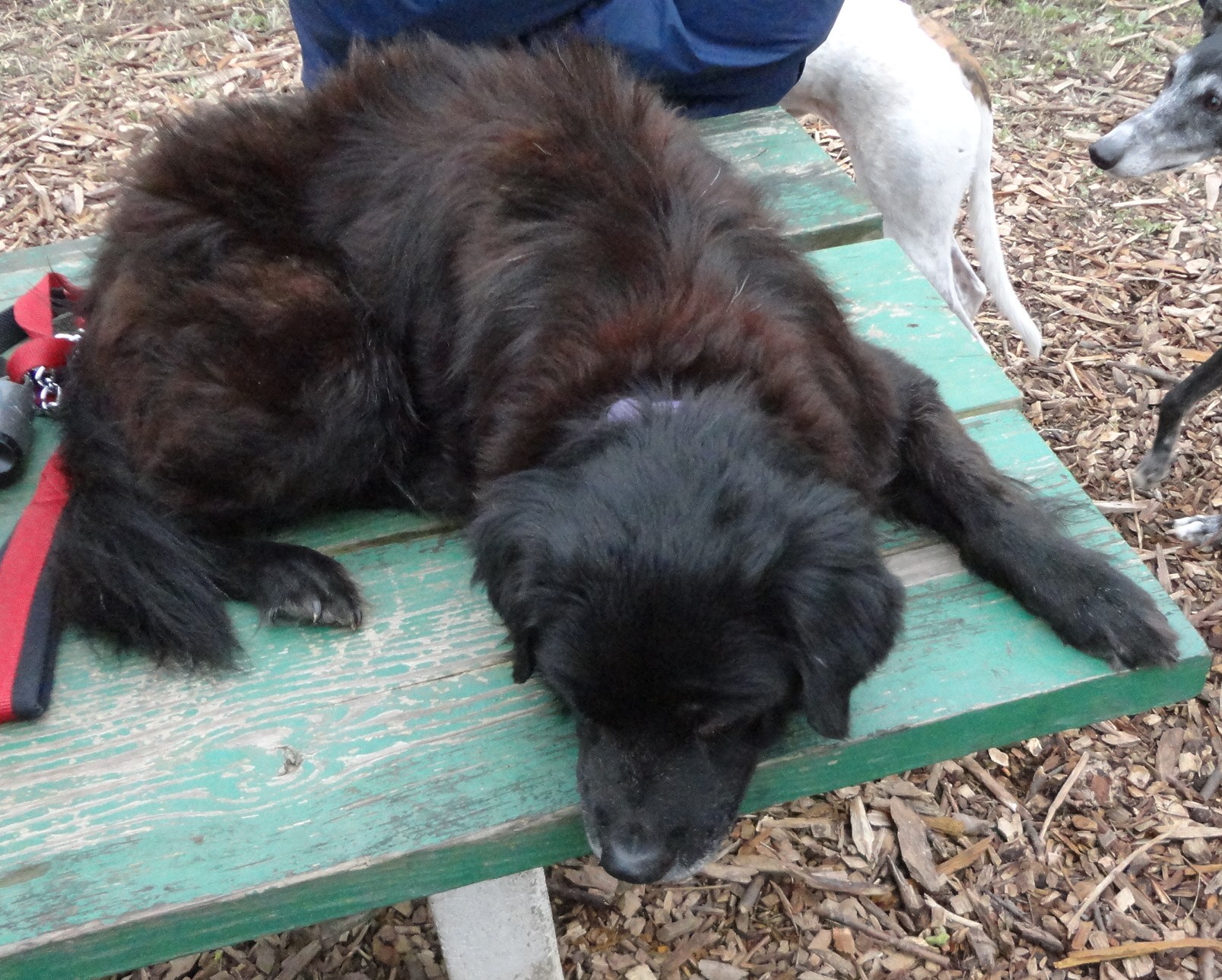
I’m really excited about Maximum Security. It’s going to be another month before it comes out (November 21, Yikes!) and I can’t stand it, so I’m posting the first 10% here. This dog park mystery features my very own Max (yes, that’s her, above) as an escape artist (she’s playing to type). If you want to go straight to the dogs, skip the prologue and go to “Day 1.”

To get the PDF, click here > Maximum Security Sample

I hope you love it!

Here’s another picture, just because.

Max is playing "Stick" while BFF Shadda (AKA "Viola") pretends she doesn't care.
Max is playing “Stick” while BFF Shadda (AKA “Viola”) pretends she doesn’t care.

For Hugh Howey

My response to Hugh’s latest blog post:OLYMPUS DIGITAL CAMERA


Social Media for Authors: The Funnel

The funnel is the most important concept in using social media. It’s the endgame. The funnel is how you obtain permission to directly contact your fans. It refers to the process of using social media to connect with your target audience, then draw them closer to you with great content that adds value (I’ll talk about that in my next post in this series) so that they want to give you their email list.

“Email? Isn’t that passe? I thought the whole point of social media was to get beyond email lists!”

You want email addresses. Why?

  1. Remember MySpace? Social media platforms go in and out of style. If someone loses interest in Facebook (or wherever) or the platform goes belly-up, you’ve lost contact.
  2.  Just because you’re in contact with someone on one of the platforms is no guarantee they’ll see your posts. The popularity of social media sites is also it’s biggest flaw. Feeds can become so crowded, posts spin by at the speed of light or they never show on feeds at all.
  3. Even the social media platforms have discovered they need email to keep members engaged. Which is why they send out notices for every little thing to their members.
  4. People check their email multiple times a day. It’s guaranteed they’ll see anything that winds up in their inbox.
  5. Even if they don’t open your email, they’ve seen your name and that keeps you in their mind. I may only open my LLBean emails a couple times a year, but seeing the name on a regular basis reminds me that I like to shop there.

It works like this: You connect with people via social media. You post new content from your web-site regularly (blogs are great for this). People go to your site to see this content. You have a prominent offer of special content if they sign up on your email list, including a specific (and attractive) gift for signing up, Then you keep that permission by sending out some form of relevant content once or twice a month (or even more often) .

I know this sounds a bit cold blooded. If you set it up properly, it’s an organic means to connect with the people who are most interested in what you have to share, and stay connected with them.

MailChimp is an excellent email service that allows you 2,000 subscribers free, with some limitations. You get great stats so you see who is opening your mail and clicking your links.  They have great tutorials. You cannot get the auto-responder with the free account, but the paid accounts start at $10 per month, if you want to go that route.

The key to all of this, the key to keeping this manageable for you and attractive to your target audience, is content. I’ll talk about that in my next post in this series.

#WoofWednesday: Seen at the Dog Park

Natalie Helps Marianne

Social Media for Authors: Venues

Everywhere you turn, a new social media venue is popping up. It’s tempting to believe you have to have a presence on all of them. This is a mistake. Instead, choose the venue(s) that you enjoy the most and serve you best. Invest yourself there.  Make one your home and add more if you have a specific reason for doing so.  Some venues can act as bridges between venues or as a mean of providing additional content. Here are my observations about some of the more popular venues.

Facebook is the big daddy of social media. It’s so big, many other sites, such as Goodreads, allow you to use your FB account to sign in with. Facebook offers business pages to go along with their personal accounts. While a personal account is invaluable, I would not bother creating an author page.

The business pages are not set up to encourage interaction, and with the changes in FB’s algorithms, there is no guarantee your fans will see your posts. Feeding content to an author page to keep it viable consumes time that would be better spent elsewhere. Of course, if your readers love cat and bacon memes, go ahead and set up that author page, you’ll be able to funnel plenty of content into it via shares from your feed.

You need to consider what you will and won’t make public. Just remember that anything you put online can wind up anywhere. Keep in mind that the politically incorrect meme full of F-bombs that you “like” can show up on your friends’ feeds, just like your “shares” do.

I live by a “I yam what I yam” philosophy. My page is public because I want people to find me. I don’t worry about what I will and won’t say. I figure if you get my books, you’ll get me, and vice versa. I’m happy to accept friend requests from people who identify themselves as fans.

Not everyone feels that way. Some folks set up personal accounts that are specifically for author business. Others take advantage of the different levels of privacy available on FB.

Find groups that relate to your book topics and participate. I don’t bother with the open writer groups. I hear they are mostly spam. I do belong to a private author group. This is an invitation-only net work of people who know each other and it is a spam-free and troll-free environment. We’re totally dedicated to supporting each other, and I love it. Writing is a lonely profession. Finding or creating such an environment can be a huge boost to your state of mind, your writing and even your sales.

Twitter is a “microblogging” site. Each “Tweet” is limited to 140 characters. If you know someone’s twitter handle, you can direct a tweet to them. I was so put out with the last John Sandford, that I tweeted my review to his official account. I suspect it’s managed by underlings, but there is at least a chance that someone in his entourage read it. With Twitter you can do things like that. Twitter allows you to bypass gatekeepers to important people. My friend, Desiree, tweets with Michael Moore on a regular basis.

These days, too much of Twitter is spam, and a lot of it is authors following authors who follow them back. Still, it can have an extensive reach. I set up my blog to auto tweet my blog posts, and Twitter to automatically repost to my FB account.

The folks with the best followings are those who tweet random bits, things that are meant to amuse or glimpses into their life, usually with a wry slant.

Twitter invented the Hashtag (#) If you add popular hashtags to your tweet, it is likely to be seen by people interested in those subjects and can possibly extend your reach. I often use #dog, #mystery and #woofwednesday.

If you’d like to find actual readers to follow (and hopefully follow you back), look up the authors of books similar to yours. click on their list of followers. Follow their followers and some of them will follow you back. You can click on each name to get a mini version of their profile to vet them first.

When you get hundreds of followers, the feed becomes unmanageable. You can create lists of followers, and when you click on that list, you’ll only see those posts.

Pintrest lets you set up boards where you post like items. Instead of disappearing into the void of a feed like FB posts, these remain visible. On Pintrest, you can share book research with fans, create pages devoted to books, characters, or personal interests. You can organize book research and resources. I have not done any of these things. but I might. One of these days.

YouTube allows you to post videos. Some folks love it. If you have the skills to make a video (some of us dinosaurs don’t) it’s a nifty way to create content to share other places. For younger people, Vlogs are popular. Hugh Howey frequently makes videos for fans.

One of the best opportunities for authors on YouTube is  Parapalooza   This is a project that posts videos of authors reading their favorite paragraph from one of their books and fans reading a paragraph from favorite books.

Linkedin is great for connecting with people professionally. If your book is related to your professional life, or of interest to a particular professional group, this can be an invaluable resource.

Vine is another video site that limits you to six second videos. It’s good for being random and silly and mostly appeals to a younger audience.

Instagram is a phone app and a community. It allows you to easily post videos and photos online. It also allows you to share on FB and other sites. This is a terrific tool if you are the sort to make random posts/tweets about everyday events.

Reddit is an online community of forums. They have forums for pretty much everything. While not as direct as Facebook and other venues, this is a good place to find people interested in niche subjects. I found forums for UFOs, Atheism, Dinosaurs and Astrology. As with all public forums, don’t feed the trolls.

Goodreads You can list your books on Goodreads and have a Goodreads author page. You can also embed your blog to your author page.  You can give away books in the hope of getting reviews. Just don’t talk about being an author, unless you’re clear the group is okay with it. Join a few groups that interest you and talk about your reading experiences. Post reviews. Don’t respond to reviews of your own books, lest you get tagged “author behaving badly” and open yourself up to the Goodreads trolls. Goodreads has been taking steps to address trollish behavior, but it’s best not to take the chance. GR members are demons for group etiquette. Establishing a presence on GR takes a long time and a lot of effort. For some people it’s worth it, because your average GR member is a rabid reader and many are librarians.

KDP forum If you self-publish on Amazon, the KDP forum is an invaluable source of information about the ins and outs of publishing ebooks on Amazon. The Kindle changes every year but the posted guidelines don’t keep up with the technological advances. This is the best place to find out the latest about how to produce the best ebook formatting. I dumped the boards a year ago when several of us broke off to create a private forum, but I still recommend it to newbies. Don’t trumpet successes, because this can lead to troll Amazon reviews (which is why my friends and I play elsewhere now). It may be best to not use your real name here. This isn’t a place to promote your books, anyway.

KBoards (formerly known as Kindle Boards) This is a forum where writers are encouraged to mingle with readers, and some successful authors are known to hang out here. I don’t know much about it. Again, be sure to mind your internet manners and don’t feed the trolls.

WordPress is a blogging venue that functions somewhat as social media because it allows you to follow other blogs. It’s also easier for people who don’t know you to find your content. This is why my blog is posted here instead of at an independent website. It’s got plenty of bells and whistles and you can add pages and upgrade to turn your blog into a full website with an independent URL.

Next: The Funnel

Your Liver and Dieting

Most folks know that fat stores are created when you eat more than you burn off, and that’s the basis for most diets. For many folks, reducing calories has a limited effectiveness. What is not widely trumpeted is that some fat stores are created to protect you from excessive toxins in your system. These fat stores will not go away until your system is able to processes these toxins, and that can’t happen as long as you are overloading your system with more toxins than your liver can handle.

The easiest weight loss I ever achieved was on a >50% raw food diet. It was wonderful. I lost 60 pounds in less than a year with no portion control. Yes, the food prep was occasionally onerous, but it was worth it. Then my doctor changed my medication and the pounds started creeping back. I started writing and that cut out time for exotic food prep. I began trashing my diet again. Then my meds were changed again and I packed on 50 pounds in a few months, without changing my eating habits.

Medications put a toxic load on your liver, the same as alcohol and recreational drugs. It’s always a good idea to care for your liver. It’s especially important if you take daily medications.

Liver cleanses are available, but I’ve never been able to bring myself to do one. The Dr. Hulda Clark recipe is well known and has been used by thousands. It also takes two days out of your life.

I think it’s more important to eat a diet that promotes liver health. I did some research and came up with the following list of foods that promote liver function:

Garlic; Grapefruit, Lemon and Lime; Beets & Carrots; Leafy Greens, especially Kale (the darker the better); Seaweeds and Algae; Green Tea; Avocados; Cruciferous Vegetables, such as Broccoli, Brussels Sprouts, Cauliflower and Cabbage; Turmeric; Walnuts; Apples (be sure these are organic); Olive Oil and other cold pressed oils; Whole Grains

Salt stimulates your liver and aids in detox. If you eat a diet of unprocessed foods, make sure you’re including some unprocessed sea salt daily. Adequate water and salt intake also helps in sleep regulation as well as the retention of serotonin and melatonin and tryptamine in the brain.

It’s interesting to note that during my high-raw diet days, lemons, garlic and carrots, apples, greens and cabbage were a big part of my diet.

Lemon in water, first thing in the morning is especially cleansing to the liver. The Master Cleanse is a fast consisting of lemonade made with maple syrup and cayenne pepper. While the cayenne does not work directly on the liver, it does aid in digestion, cleansing the large intestine and improving circulation.

Turmeric: The New Fat Terminator?

Lat Spring I dumped 20 pounds in about a month on the Aztec Diet Chia Challenge. Then I went through some relationship turmoil and while I did not resume previous bad habits, I lost the motivation to stick with a reduced calorie liquid diet. Since then I’ve been wrestling with the same five pounds.

I’d like to lose at least thirty more pounds.

I still start every morning with a smoothie. I drink several Kale Blueberry Smoothies every week, on those days when I want to be especially energized. But my brain injury and struggles with depression require more Omega 3 fats than the Aztec Diet allows. I am watching my carbs. Pizza and ice cream are a non-grata foods in my house. I no longer hit the Wendy’s drive through for 1/2 pound cheeseburgers.

I’m stuck. I’m spinning my wheels and I’m tired of the mud splashing in my face.

Yesterday I picked up the November 4th Issue of First for Women because the neon-green and white headline read “The Spice that Ends Belly Fat” with “Lose 6-9 LBS Each Week + End Bloat” and “The active ingredient in turmeric collapses midsection fat cells + powers up the liver by 89%”

I’ve been interested in turmeric’s cancer fighting and skin-enhancing properties  for a long time but have limited my turmeric consumption to spicing my weekly pot of beans with curry. So I grabbed the magazine.

First declares that turmeric destroys existing fat cells, prevents the creation of new fat cells, revs up your metabolism AND repairs the liver. Sound good? They also state that mice on a high fat diet had reduced their fat by 43% in 12 weeks when fed turmeric extract in an amount equivalent to giving a human 1 tsp per day.

The article then shares a number of recipes that use turmeric. Boo. Hiss. I like what I’m eating now, thank you. They also featured expensive supplements. More boos. More hisses. I went on the internet. Turns out you can buy turmeric tea that contains the equivalent to 1 tsp turmeric.

Why buy a tea? I heated up a cup of water and stirred in 1/2 tsp turmeric, and it is palatable and savory.  I figure I can substitute turmeric tea for coffee, and easily get in 1 tsp per day.

Turmeric has many health enhancing properties. One of the better articles is here

High doses, in excess of 2 grams per day (1 tsp is approximately 2.2 grams) can cause nausea, diarrhea, increase risk of bleeding, lower blood pressure, and lower blood sugar. It can also cause your gall bladder to contract, causing people with gall stones to have issues.  If you are diabetic, hemophiliac, taking blood thinners or blood pressure medications, then you should consult with your doctor before taking turmeric. Even if you have none of these conditions, I would try lower amounts first to see how you react to it.

Me, I’m going to give it a try. I’m doubting the 6-9 lbs per week claim. Still, half of that would be terrific. Anything that would get me losing regularly would be a Godsend.  Will it work? I’ll let you know.

Social Media for Authors: Your Platform, Pt 2

In part 1, I talked about cultivating a core group of cheerleaders for your books. Today I’ll talk about directly reaching your target audience.

Lets face it, not everyone is going to love your book. Even “To Kill a Mockingbird” has 92 1 star reviews on Amazon. So figure out who your target audience is, and find ways to connect with them. Notice, I said “connect with” not “sell to.”

If you write about what you know, you already have some connections with your target audience. Write down everything you can think of. My books have murders, mystery, romance, dogs, a dog park, a female amateur sleuth, and Cincinnati locations. My main audience is dog people who read mysteries. It behooves me to find ways to connect with dog parks, rescue groups and book clubs that cater to mysteries. Imight also be able to capitalize on the Cincinnati connection.

Next figure out what books your audience is already reading. If you can’t fit yourself cleanly into a genre, start with books YOU like to read. Presumably some of what you like has rubbed off on your writing. (I’ll talk more about connecting with these folks in a future post.)

In real life, connecting in all those places will leave you with no time to write. While face to face contacts have more value, internet contacts can be made at home, in your pajamas, in much less time. And it’s much easier for introverts.

I know, you’d much rather write. Self-publishing magnate Russell Blake advises spending 20% of your writing time in promotion. Bite the bullet. Find places on the internet where your audience is congregating and join in. Places to start are Facebook, Reddit, Pintrest, Twitter, Goodreads and thousands of special interest forums.

Pick one or two internet venues and invest time in them as a participant. Spend a little time there every day. Let people get to know you. Do NOT bring up your book unless someone asks, and if they do, keep it brief. Exercise good internet manners. Stay out of arguments, don’t feed the trolls, and don’t discuss religion or politics unless those topics are key to you as a writer. If you choose to discuss hot topics, make sure you are being calm, rational and respectful about it.

The only time to approach a group cold is if you are offering something special (not your book) that would interest them. For example, I ran a cover-dog contest on this blog, offering the prize of the cover painting to the winner. So I posted that in a variety of dog park pages, where people who own dogs would see it.

Does this sound like a pain? It can be, and if it is, it’s not going to work. Pick groups you are compatible with and make it fun. Forget about your book and focus on the group. Respond to posts, ask questions, engage. It’s more important that you invest quality time in a few places than spreading yourself all over the web.

Next, I’ll talk about some popular Social Media venues on the web.